Designing AI Agents for Mission-Critical Business Workflows
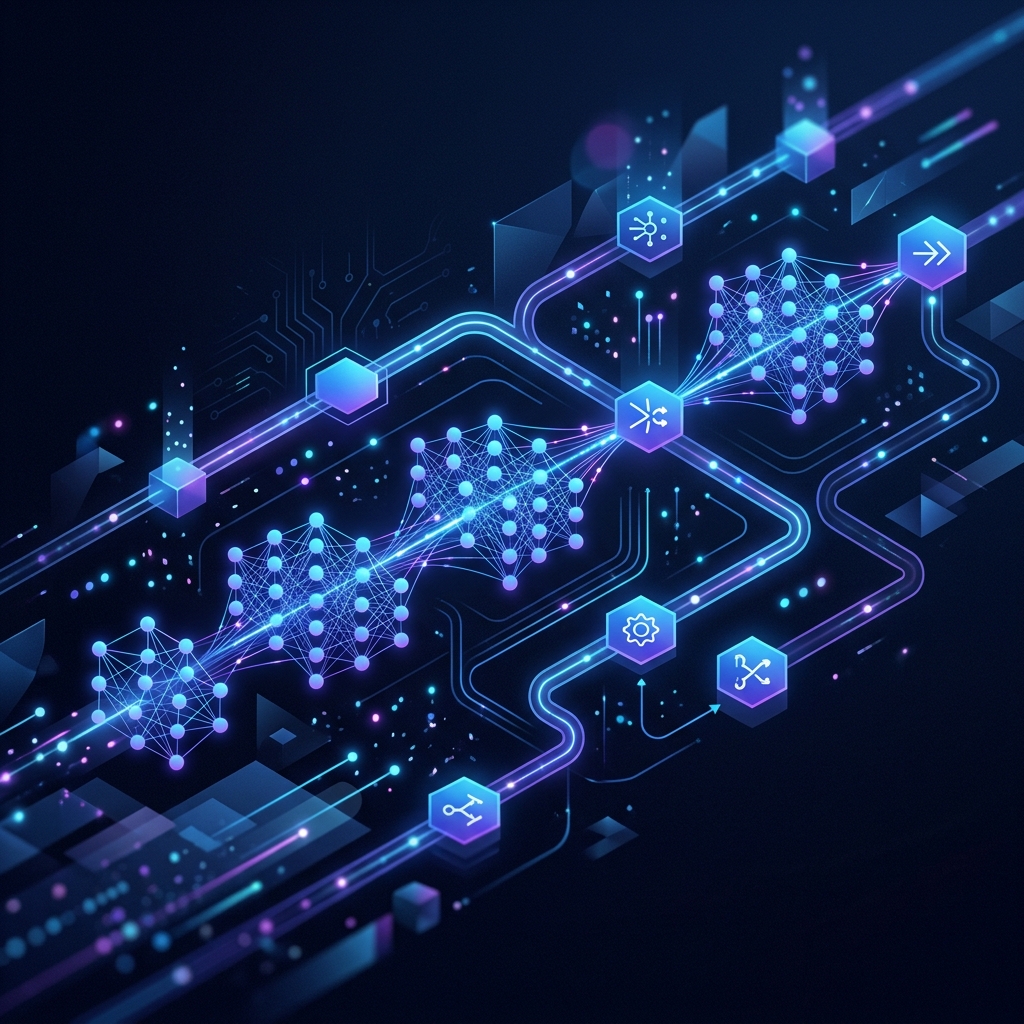
Deploying large language models (LLMs) to answer simple web FAQs is straightforward. But when you ask an LLM agent to modify a shipping record in a database, write to an enterprise CRM, or dispatch custom emails directly to clients, naive API wrappers quickly break.
In enterprise operations, errors are not just inconvenient; they carry real costs. If an agent hallucinates a customer's product ID or deletes a record due to a parsing slip, it breaks operational trust. In this technical article, we break down how to design agents that are robust, predictable, and safe.
1. The Human-in-the-Loop Fallback Pattern
An agent should never run entirely unsupervised unless its confidence score exceeds a strict mathematical threshold. To achieve this, we evaluate the prompt output probability (using logprobs from the API) or query the LLM to rate its own confidence. If the output confidence falls below 85%, the system halts execution, logs the current state, and pushes a task to human staff via Slack or Zendesk.
"The secret to reliable AI agents is knowing exactly when to step down and let a human operator take over. An automated system that handles 80% of tasks cleanly and flags the rest is a major victory."
2. Transactional Safety & Rollback Targets
Before an agent requests a database mutation, we store the current state in a cache. If the agent's database command fails, or if a webhook throws a status error (e.g. 500), we trigger a rollback function. This is standard database safety applied to AI operations:
// Pseudocode of a self-monitoring agent execution block
async function executeAgentAction(action, data) {
  const backup = await getBackupState(data.targetId);
  try {
    const response = await callAgentModel(action, data);
    if (response.confidenceScore < 0.85) {
      throw new Error("Low confidence score. Escalate.");
    }
    await databaseMutation(response.mutationQuery);
    await logAuditRecord(data.targetId, "Success", response.explanation);
  } catch (error) {
    await databaseRollback(backup);
    await notifyHumanSupervisor(data.targetId, error.message);
  }
}
3. Schema Validation & Outputs
AI agents often output unstructured text. For database mutations or CRM additions, we force structured JSON outputs using OpenAI's Structured Outputs or schema validator tools (like Zod). This guarantees that every output exactly matches our CRM's database format before any API request is sent.
Conclusion
By structuring agents with strict threshold monitoring, rollback states, and schema checks, you transform unpredictable chat models into reliable business systems. At AICraftGen, this engineering approach is our baseline standard for every solution we deploy.

Ananya Iyer
Head of AI & Engineering at AICraftGen. Former systems architect specializing in secure LLM pipelines and workflow orchestration.